37-48 of 154 results

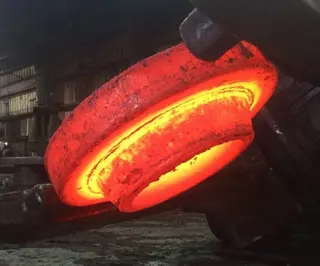
Cold Heading vs. Cold Forging: Key Differences & Applications

Cold heading and cold forging processes hold a significant position in modern metalworking. Although they share similarities in principle, both relying on the plastic deformation characteristics of metals at room temperature for processing, they have distinct differences in practical applications. Cold heading focuses on the efficient manufacturing of small parts and is widely used in the production of fasteners. In contrast, cold forging is more suitable for the precision machining of large-sized...

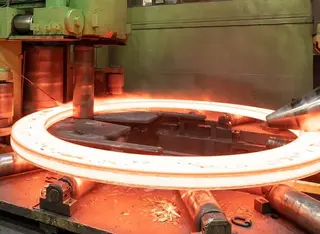
What is Radial Forging Technology?

In modern manufacturing, the diversity and efficiency of metalworking technologies play a crucial role in determining the quality of products and the efficiency of production. Radial forging, as an advanced metalworking process, has gained widespread application in various fields due to its unique advantages. This article will provide a detailed introduction to the principles, advantages, application scope, and different types of radial forging processes, helping readers gain a comprehensive understanding...

Precision Forging Technology for Automotive Parts

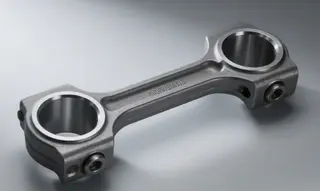
In the era of rapid development of the automotive industry, every link in the car manufacturing process is of vital importance. From design and research to production and manufacturing, from parts supply to vehicle assembly, each step directly affects the performance, quality, and market competitiveness of a car. In this complex manufacturing system, precision forging technology, as one of the core technologies for automotive parts production, is gradually becoming a key force in driving the progress...

Titanium Alloy Forging Process: Overcoming Adhesion Challenges

In modern manufacturing, titanium alloy is widely used in aerospace, automotive manufacturing, and medical devices due to its excellent properties, such as high strength, low density, and good corrosion resistance. However, titanium alloy faces a thorny issue during hot forging and extrusion processes: its strong tendency to adhere. This adhesion not only affects production efficiency but also leads to surface defects on forgings and damage to molds. This article will delve into the causes of titanium...

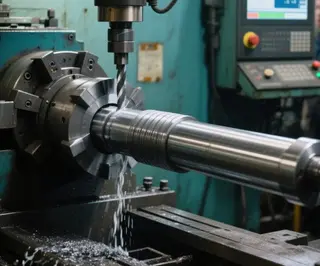
Cold Extrusion Technology in the Forging Industry

In the field of mechanical manufacturing, forgings are the core components of many mechanical devices, and their quality and performance directly affect the operating efficiency and reliability of the entire equipment. Cold extrusion technology, as an advanced metalworking process, is gradually changing the traditional production methods of forgings. This article will focus on cold extrusion forgings, exploring their technical principles, advantages, applications, and challenges in depth to help...

Forging Process for Large-Six-Throw Crankshafts

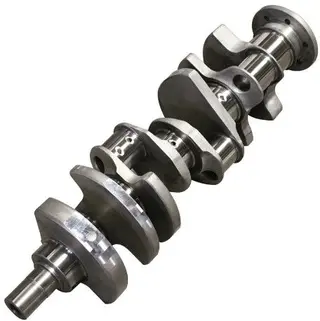
In industrial production, compressors can be regarded as the heart of power machinery, and the crankshaft is the backbone of the compressor. The role of the crankshaft is to convert the reciprocating motion of the piston into rotational motion and to output all the power externally. Due to its extremely complex working environment, it is subjected to complex alternating loads such as periodically varying gas forces, inertial forces of reciprocating motion mass, and centrifugal forces of rotational...


Total 154 Records, 12 records per page