China Custom Carbon Steel Forging Parts OEM Manufacturer

To Be Your Right Partner
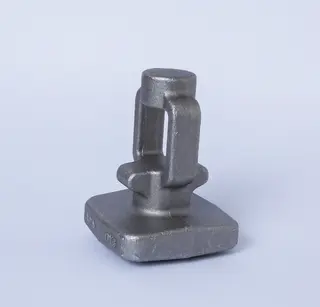
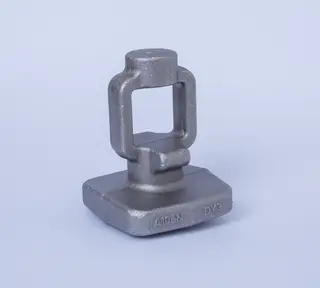
Carbon steel forgings are created through the metallurgical process of forging, in which carbon steel is given a particular shape by the application of pressure and heat. Carbon steel is an alloy primarily composed of iron and carbon, with other elements present in smaller quantities.
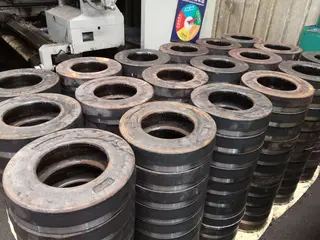
The carbon steel forging process begins by heating a solid piece of carbon steel, known as a billet or blank, to a temperature above its recrystallization point. This temperature allows the material to become malleable and easily deformed.
Once the billet reaches the desired temperature, it is placed into a die, which is a specially designed tool or mold that defines the shape of the final forged component. The heated billet is then subjected to compressive forces using a forging press or hammer, deforming it to conform to the shape of the die cavity.
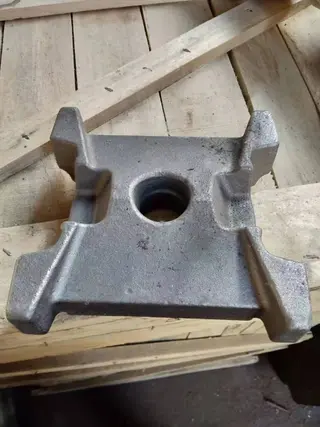
The applied pressure causes the metal to flow and take on the shape of the die, resulting in the desired form of the forged component. The forging process can produce various shapes, such as bars, shafts, cylinders, discs, and complex geometries. After the forging operation, the forged part may undergo further heat treatment, machining, or finishing processes as required.


Copper Forging or Brass Forging is the forging process utilizing copper or brass as the forging material.
Copper alloys have good plasticity and strength, good abrasion resistance and thermal conductivity, especially good corrosion resistance in air and sea water. It has been widely used in electric power, instruments, ships and other industrial sectors.
Most copper alloys have good plasticity at room temperature and high temperature, and can be forged smoothly. Even in the presence of tensile stress, they still have enough plasticity. A few tin-phosphorous bronze with high quality fraction of tin (such as qsn7-0.2) and lead brass with high quality fraction of lead (such as hpb59-1 and hpb64-2) have low plasticity and are sensitive to tensile stress. Qsn7-0.2 is a single-phase invariant solution at room temperature when deformation occurs under static tensile stress. Has the very high plasticity, can undertake cold deformation, but plasticity under high temperature is very low, the reason is that have low melting (alpha + delta + CU3P) eutectic at high temperature.
Most copper alloys are not sensitive to deformation speed and can be forged on a press or hammer, but it is advisable to forge on a press. The phenomenon of heat effect is obvious when tin-phosphor-bronze and manganese bronze are forged. If the deformation speed is too fast, it is easy to overheat or even overheat due to the thermal effect.
When the heating temperature is too high, the copper alloy grain grew up rapidly, reduce its plasticity, so the heating temperature of copper alloy are not more than 900 ℃. When the deformation temperature is below 650 ℃, the deformation resistance increases quickly.


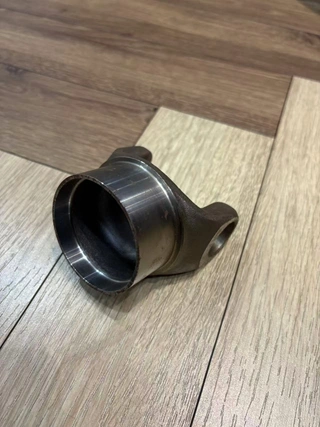

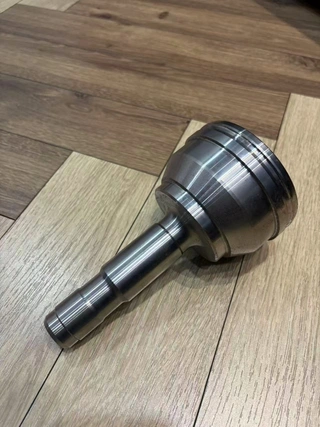
The ball cage, also known as the constant velocity joint, is a crucial component in the transmission system of passenger cars, responsible for transmitting engine power to the drive wheels. It consists of components such as a bell housing, steel balls, a cage, a dust cover, and lubricating grease, ensuring equal angular velocity at any angle between the two shafts.
Drop forging is a kind of forging process different from press forging, upset forging or other forging processes. In drop forging, the billet is deformed into desired shapes with the help of forging dies. Types of drop forging are open-die drop forging and closed-die drop forging. The shape of the die is the main differences between open die drop forging and closed die drop forging like the names. Closed die drop forging does fully encloses the workpiece, while open die forging does not.
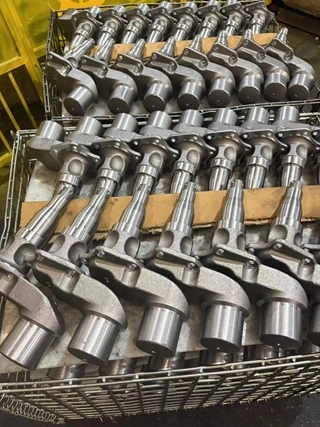
Closed die drop forging, or closed die forging, is a forging way that presses heated round metal bar into the shape we need under the pressure of the dies. It will ensure the accuracy of dimensions and little machining allowance, no structure limit, high production efficiency. General steps of closed die drop forging are: mould developing-raw material cutting-heating material-forging-trimming cutting-heat treatment-shot blasting-machining-surface treatment-package. Materials that applied in drop forging process can be stainless steel, alloy steel, carbon steel, copper and other forged materials.
Design of closed die drop forgings and tooling
The tooling or dies in closed die drop forging are usually made of tool steel. Tool steel will feature closed die forging dies with good impact resistance, high wear resistance, maintain strength at high temperatures, and can even withstand cycles of rapid heating and cooling. In order to produce a better, more economical die, we need to follow below:
Typical characteristics of closed die drop forgings:
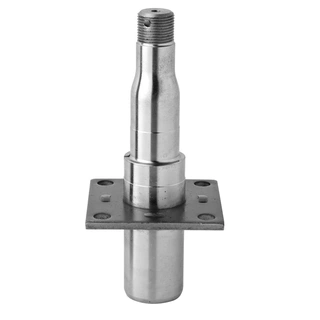
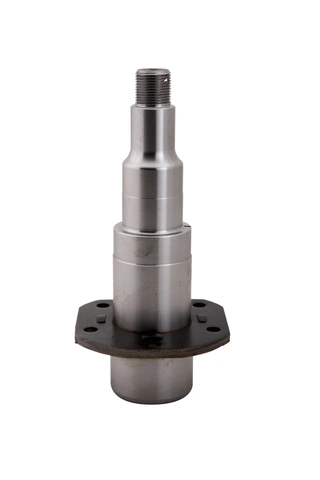
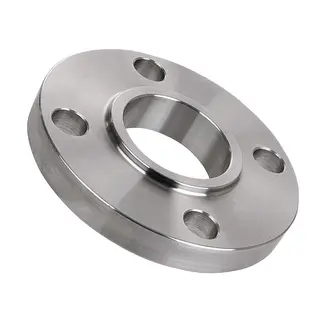

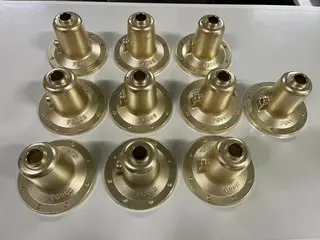
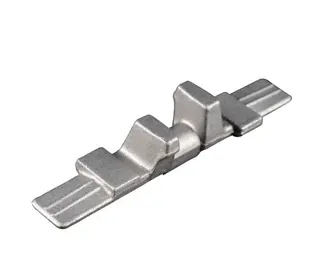
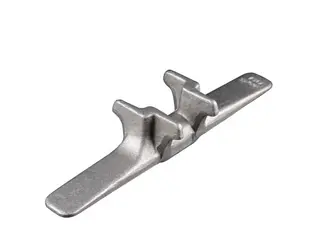
● High Strength
Carbon steel forgings have high strength and rigidity, making them capable of withstanding heavy loads and pressures.
● Good Wear Resistance
Carbon steel forgings exhibit excellent wear resistance, making them suitable for applications that require frequent abrasion or friction.
● Strong Corrosion Resistance
Carbon steel forgings possess a certain level of corrosion resistance, enabling them to withstand various corrosive mediums and environments.
● Cost-effectiveness
Carbon steel is a widely used material, and its production cost is relatively low. Therefore, carbon steel forging tends to be cost-effective compared to other options.
● Good Machinability
Carbon steel is easy to machine and shape, allowing for the manufacture of complex shapes and precise dimensions through the forging process.
● Excellent Weldability
Carbon steel has good weldability, making it convenient to connect and assemble with other materials.
● Automotive Industry
Carbon steel forgings are extensively used in the automotive industry for manufacturing components such as crankshafts, connecting rods, gears, and axle shafts. These forgings provide the required strength and durability to withstand high loads and harsh operating conditions.
● Aerospace Industry
In the aerospace sector, carbon steel forged parts are used in the production of critical components like landing gear, turbine discs, and engine mounts. These forgings offer excellent strength-to-weight ratio and resistance to fatigue, making them suitable for aerospace applications.
● Oil and Gas Industry
Carbon steel forgings find extensive usage in the oil and gas industry for manufacturing valves, flanges, fittings, and pressure vessels. These forgings possess the necessary strength and corrosion resistance to withstand high-pressure and corrosive environments.
● Machinery and Equipment
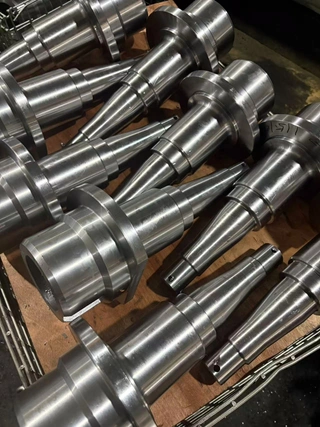
Various machinery and equipment rely on carbon steel forgings for components such as shafts, gears, bearings, and tooling. The high strength and machinability of carbon steel make it suitable for heavy-duty applications in this industry.
● Construction Industry
Carbon steel forgings are utilized in construction projects for structural applications like beams, columns, and connecting elements. These forgings provide the necessary strength and stability required for building structures.
● Power Generation
Carbon steel forgings play an important role in power generation industries, including thermal power plants and wind turbines. They are used for manufacturing turbine blades, generator shafts, and other critical components that require high strength and resistance to temperature and stress.
Creator Components offers a complete solution of various carbon steel forgings to meet your needs. For further information on this, please kindly contact us. We are committed to being your trusted source for high quality forgings.