49-60 of 154 results

How to Select Forging Materials

The material that is selected for forging process must be one that can achieve the required physical and mechanical properties. Where alloys from several groups meet performance requirements, the most economical alloy, in terms of material and processing costs, should be chosen. See below summary on making a preliminary selection of forging materials:


Metallurgical Defects in Titanium Alloy Forging Process

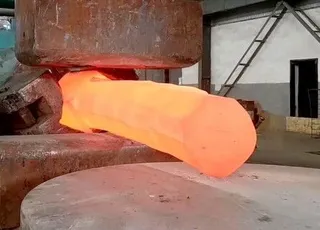
Titanium alloys are renowned for their exceptional strength-to-weight ratio, corrosion resistance, and high-temperature stability. These properties make them invaluable in advanced applications such as aerospace, chemical engineering, and marine engineering. However, during the forging process, titanium alloys are prone to various metallurgical defects due to the material's unique characteristics and the complex requirements of the forging process. These defects not only compromise the mechanical...

The Defects of Forged Components and Improvement Measures

Forging is one of the most common and widely used processes in metalworking industries. Known for its high strength and excellent plasticity, forged components are crucial in various sectors such as aerospace, automotive, metallurgy, chemicals, and energy. However, despite its advantages, the forging process can sometimes lead to various defects in the final product. These defects can negatively affect the appearance, performance, and, in some cases, the safety of the forged components. As a result,...

Media Selection for Optimizing Forging Quenching Process

The quenching process is a critical step in metal heat treatment widely used to enhance the hardness, wear resistance, and mechanical properties of metal materials. This process is particularly significant in forging production, as it directly influences the final quality of the forged parts. Among the key properties affected by quenching are hardness, strength, toughness, and wear resistance. Moreover, the choice, use, and maintenance of quenching media play an essential role in ensuring the quality...

Challenges and Solutions in Special Alloy Forging

Special alloy forging is a highly complex and demanding process that finds applications in aerospace, petrochemical, nuclear energy, and high-temperature, high-pressure environments. Compared to regular steel and low-alloy steels, special alloys have more complex compositions, higher levels of alloying, and more stringent operating conditions. As a result, their forging processes and technological requirements are significantly more demanding. During the forging process, special alloys experience...

Forging Measurement and Inspection Methods

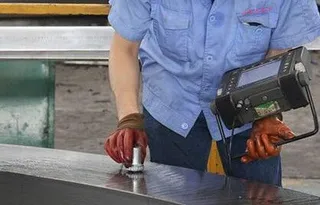
Forgings are metal components formed through a forging process, which involves shaping metal using compressive forces. These components are often prized for their mechanical strength and durability, making them ideal for use in industries such as aerospace, automotive, and heavy machinery. Due to the challenging operating conditions that forgings typically face, such as high temperatures, pressures, and heavy loads, the requirements for their dimensional accuracy, shape, and internal quality are...

Overheating in Forging: Causes, Effects and Prevention

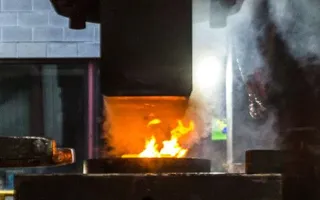
In the forging process, temperature control is a critical factor in ensuring product quality. Overheating of forged parts occurs when the heating temperature is too high or the heating time is too long, leading to adverse microstructural changes in the metal. Overheating not only affects the appearance of the forged part but also causes a significant reduction in its mechanical properties, ultimately impacting its service life and safety. Therefore, understanding the manifestations, causes, effects,...

Precision Die Forging: Advantages and Applications

Precision die forging is an advanced manufacturing technique that plays a critical role in the production of high-precision, high-strength components in modern industries. Compared to traditional die forging, precision die forging offers significant advantages in terms of part quality, accuracy, production efficiency, and cost control. As a result, it has been widely applied across various sectors, including aerospace, automotive, machinery, and electrical industries. This article delves into the...

Understanding and Mitigating Oxidation in Forgings

The oxidation process of forgings refers to the phenomenon where metal reacts with oxygen at high temperatures, forming an oxide scale. During the forging process, especially in the heating stage, the surface of the forging is exposed to air or furnace gases, making oxidation inevitable. Oxidation not only affects the surface quality and dimensional accuracy of the forging but may also impact its mechanical properties and subsequent processing and assembly. Therefore, understanding the oxidation...

Total 154 Records, 12 records per page