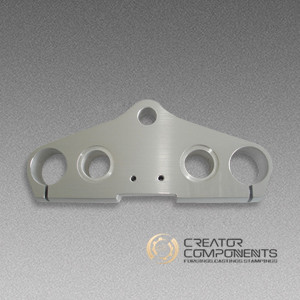
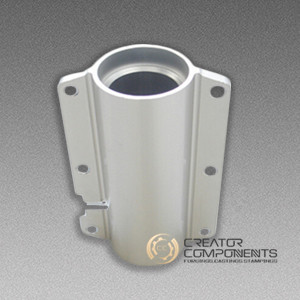
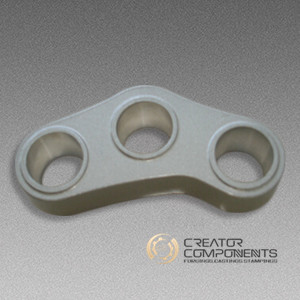
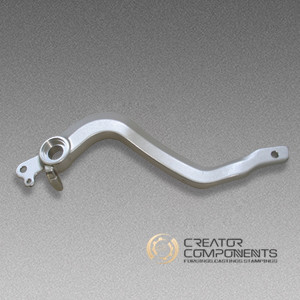
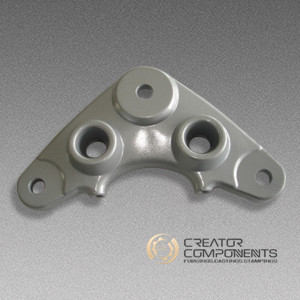
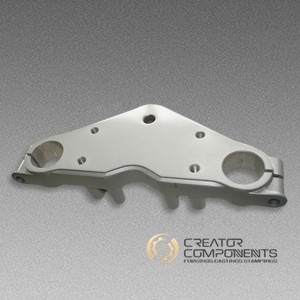
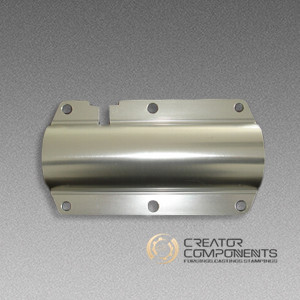
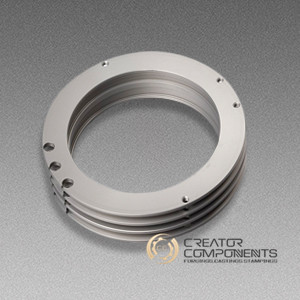
Aluminum forgings are produced through a metallurgical process that involves shaping aluminum using compressive force. The forging process enhances the strength of the metal by altering its grain structure to match the desired shape, resulting in a final product that is stronger than those produced through welding, casting, and fabrication methods.
The process starts by heating the aluminum alloy billet to a specific temperature, usually below the melting point of the alloy. The heated billet is then placed in a die and compressed under high pressure, causing the material to flow and take the shape of the die cavity. This plastic deformation allows for the creation of complex shapes and intricate details.
Aluminum alloy forgings offer several advantages compared to other manufacturing processes. Here are some key advantages:
● Enhanced Mechanical Properties
Aluminum alloy forgings exhibit improved mechanical properties compared to cast or machined components. The forging process refines the grain structure of the material, resulting in increased strength, better fatigue resistance, and improved structural integrity. Forged aluminum alloys can withstand high-stress applications and provide excellent load-bearing capabilities.
● Design Flexibility
Forging allows for the creation of complex shapes and intricate geometries that may be challenging or expensive to achieve through other manufacturing methods. The process enables precise control over the final shape, dimensions, and features of the component, providing design flexibility for engineers and designers.
● Improved Fatigue Resistance
Aluminum alloy forgings have superior fatigue resistance compared to cast or welded components. The uniform grain structure obtained through forging minimizes stress concentration points, enhancing the component's ability to withstand cyclic loading and prolonged usage without failure.
● Cost Efficiency
Although the initial tooling and equipment costs for forging may be higher than other manufacturing processes, the overall cost efficiency of aluminum alloy forgings is often favorable. Forgings require minimal post-processing, reducing machining and finishing operations. Additionally, the high strength-to-weight ratio of aluminum alloys allows for lightweight designs, leading to cost savings in transportation, energy consumption, and material usage.
● Material Utilization
The forging process maximizes the utilization of materials, resulting in minimal material waste. Unlike casting, where excess material (such as sprues, runners, and gates) must be removed, forging efficiently shapes the billet into the desired form, minimizing material loss and improving material efficiency.
● Excellent Corrosion Resistance
Aluminum alloys inherently possess good corrosion resistance, making forged aluminum components suitable for a wide range of applications and environments. They can withstand exposure to moisture, chemicals, and harsh weather conditions without significant degradation.
● Aerospace Industry
Aluminum alloy forgings are extensively used in the aerospace industry for critical components such as aircraft structural parts, landing gear components, wing spars, engine mounts, and rotor hubs. The combination of high strength, lightweight properties, and excellent fatigue resistance makes forged aluminum alloys well-suited for aircraft applications, contributing to reduced weight and improved fuel efficiency.
● Automotive Industry
Aluminum alloy forgings are employed in the automotive industry for various components that require high strength and lightweight characteristics. These include suspension components (such as control arms and knuckles), steering system parts, transmission components, engine connecting rods, and wheel hubs. Forged aluminum alloys help reduce vehicle weight, enhance performance, and improve fuel economy.
● Sports and Recreation Equipment
Several sports and recreation industries utilize aluminum alloy forgings. This includes high-performance bicycle frames, golf club heads, tennis racket frames, fishing reel components, and other sporting goods requiring lightweight, durable, and high-strength materials.
● Defense and Military Applications
Aluminum alloy forgings are utilized in defense and military applications where strength, durability, and reliability are crucial. Examples include armored vehicle components, missile and rocket structures, weapon systems, and naval vessel components. The lightweight nature of aluminum forgings contributes to improved mobility and maneuverability for military equipment.
● Marine Industry
Forged aluminum alloys find use in the marine industry for boat and shipbuilding applications. Components such as hull structures, mast fittings, deck fittings, and propulsion system parts benefit from the corrosion resistance and strength offered by aluminum forgings.
● Construction and Architecture
Forged aluminum alloys find application in the construction and architectural sectors for structural components like beams, columns, and facades. The lightweight nature of aluminum makes it easier to handle and transport, while its strength ensures structural integrity.
Creator Components offers a complete solution of various aluminum alloy forgings to meet your needs. For further information on this, please kindly contact us. We are committed to being your trusted source for high quality forgings.