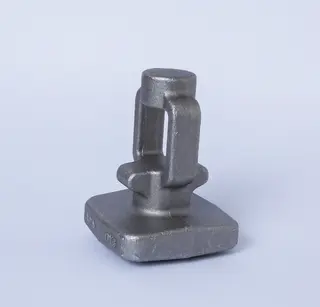
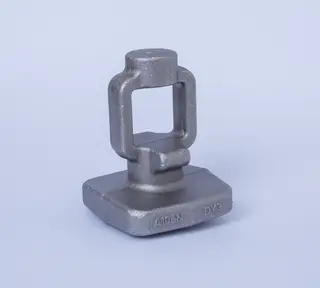
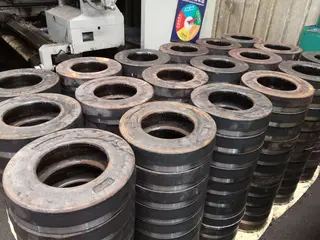
Custom Forged Steel Parts from China Forging Company

To Be Your Right Partner
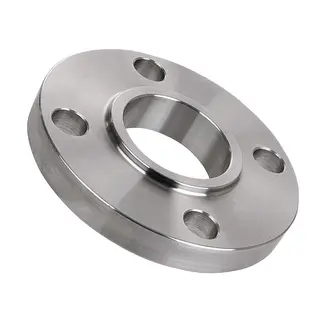
As a leading China forging company, we provides Premium Quality forged carbon or alloy steel parts custom fabrication services for high end customers all over the world.
Mercedes Benz has been one of our clients for decades.


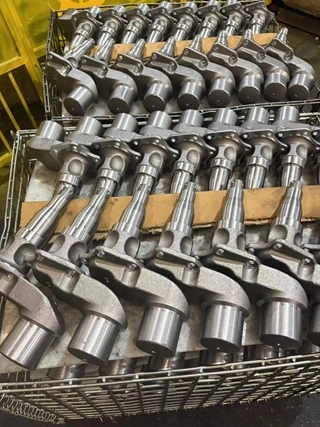
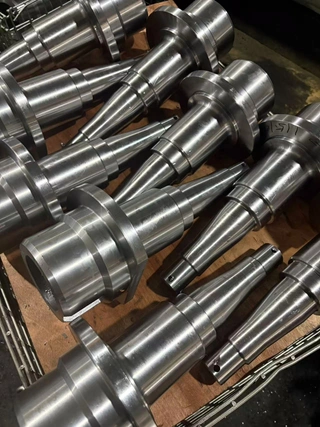
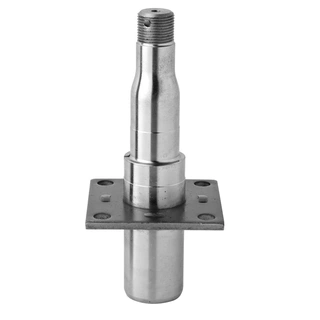
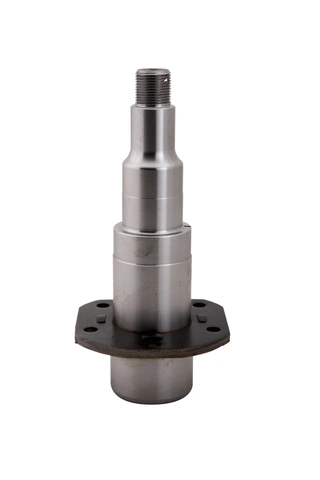
High‑strength hot‑die forged flange shaft for automobile transmission system. We supply forging blanks as well as CNC‑machined finished parts, custom‑made according to customer drawings.


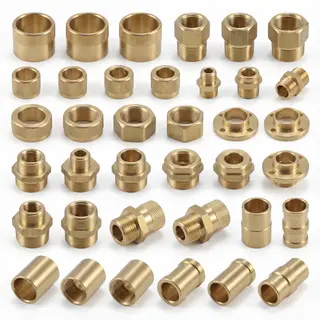
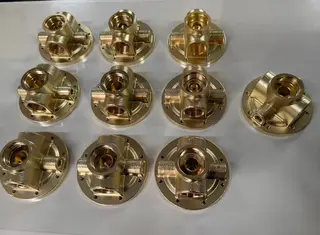
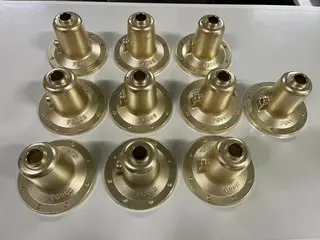
Copper Forging or Brass Forging is the forging process utilizing copper or brass as the forging material.
Copper alloys have good plasticity and strength, good abrasion resistance and thermal conductivity, especially good corrosion resistance in air and sea water. It has been widely used in electric power, instruments, ships and other industrial sectors.
Most copper alloys have good plasticity at room temperature and high temperature, and can be forged smoothly. Even in the presence of tensile stress, they still have enough plasticity. A few tin-phosphorous bronze with high quality fraction of tin (such as qsn7-0.2) and lead brass with high quality fraction of lead (such as hpb59-1 and hpb64-2) have low plasticity and are sensitive to tensile stress. Qsn7-0.2 is a single-phase invariant solution at room temperature when deformation occurs under static tensile stress. Has the very high plasticity, can undertake cold deformation, but plasticity under high temperature is very low, the reason is that have low melting (alpha + delta + CU3P) eutectic at high temperature.
Most copper alloys are not sensitive to deformation speed and can be forged on a press or hammer, but it is advisable to forge on a press. The phenomenon of heat effect is obvious when tin-phosphor-bronze and manganese bronze are forged. If the deformation speed is too fast, it is easy to overheat or even overheat due to the thermal effect.
When the heating temperature is too high, the copper alloy grain grew up rapidly, reduce its plasticity, so the heating temperature of copper alloy are not more than 900 ℃. When the deformation temperature is below 650 ℃, the deformation resistance increases quickly.


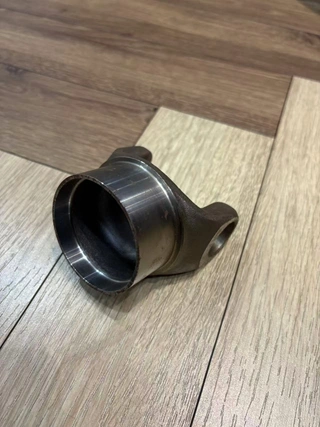
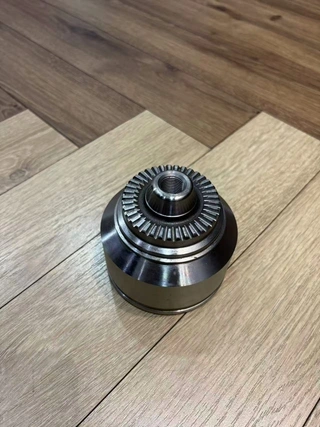
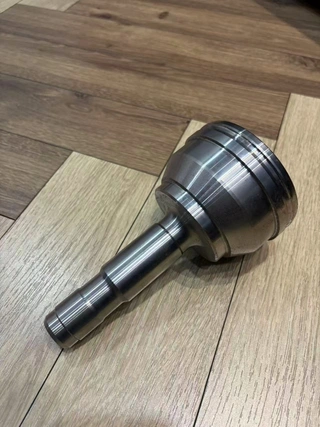
The ball cage, also known as the constant velocity joint, is a crucial component in the transmission system of passenger cars, responsible for transmitting engine power to the drive wheels. It consists of components such as a bell housing, steel balls, a cage, a dust cover, and lubricating grease, ensuring equal angular velocity at any angle between the two shafts.
Drop forging is a kind of forging process different from press forging, upset forging or other forging processes. In drop forging, the billet is deformed into desired shapes with the help of forging dies. Types of drop forging are open-die drop forging and closed-die drop forging. The shape of the die is the main differences between open die drop forging and closed die drop forging like the names. Closed die drop forging does fully encloses the workpiece, while open die forging does not.
Closed die drop forging, or closed die forging, is a forging way that presses heated round metal bar into the shape we need under the pressure of the dies. It will ensure the accuracy of dimensions and little machining allowance, no structure limit, high production efficiency. General steps of closed die drop forging are: mould developing-raw material cutting-heating material-forging-trimming cutting-heat treatment-shot blasting-machining-surface treatment-package. Materials that applied in drop forging process can be stainless steel, alloy steel, carbon steel, copper and other forged materials.
Design of closed die drop forgings and tooling
The tooling or dies in closed die drop forging are usually made of tool steel. Tool steel will feature closed die forging dies with good impact resistance, high wear resistance, maintain strength at high temperatures, and can even withstand cycles of rapid heating and cooling. In order to produce a better, more economical die, we need to follow below:
Typical characteristics of closed die drop forgings: