
In many sectors of modern industry, copper forgings play an indispensable role. From power transmission and mechanical manufacturing to aerospace and electronic communications, copper forgings provide reliable support for the stable operation of complex equipment thanks to their outstanding physical and chemical properties. This article offers an in-depth discussion of the key stages in copper forging and the associated heat treatment processes, helping readers gain a comprehensive understanding of this sophisticated and highly controlled manufacturing technology.
Copper forging is a complex and delicate manufacturing process in which every step has a decisive impact on the final product’s quality and performance. From billet preparation to final forming, strict control is required to ensure density, dimensional accuracy, and service performance. The following sections provide a detailed analysis of the critical stages involved.
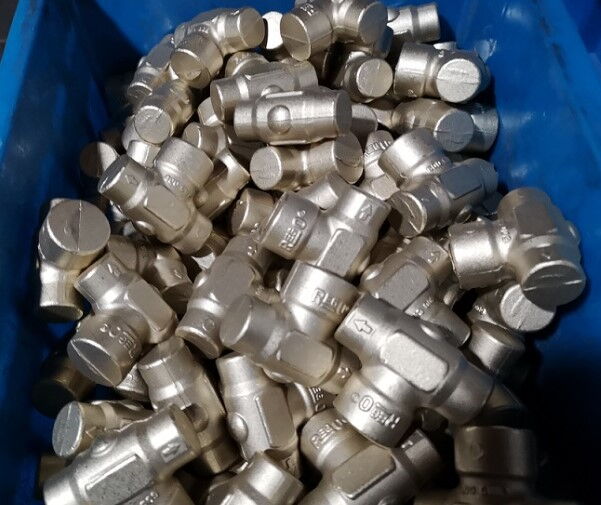
The first step in copper forging is billet preparation. Based on the size and shape requirements of the forging, accurate calculation of billet weight is essential. This calculation must consider not only the forging volume but also factors such as material loss during heating and the deformation ratio. In most cases, high-purity electrolytic copper or specific copper alloys are selected, as they provide the required physical properties and good forgeability.
Heating is one of the most critical steps in copper forging. Copper has a relatively low recrystallization temperature, generally controlled between 700 and 800 °C. If the temperature is too low, deformation resistance increases sharply, which may lead to cracking; if the temperature is too high, excessive grain growth or oxidation may occur, seriously affecting forging quality. Therefore, the heating temperature must be strictly controlled, and a slightly reducing or neutral atmosphere should be maintained in the furnace to prevent the formation of hard-to-remove oxide scale on the copper surface. Such oxide layers not only hinder subsequent processing but also degrade surface quality.
The forging stage is crucial in determining the internal microstructure of copper forgings. For small forgings, free-forging equipment such as air hammers or steam hammers is commonly used. These machines rely on impact forces to promote metal flow, allowing the material to fill the die cavity and form the desired shape. For large or complex forgings, hydraulic presses or water-powered presses are required for die forging. Die forging provides higher dimensional accuracy and enables more complex geometries, though it demands more advanced equipment and technical expertise.
During hammer forging, it is important to follow a light–heavy–light striking sequence. Initial light blows break the surface oxide layer and ensure proper positioning; heavy blows in the middle stage ensure full forging penetration, consolidating internal porosity and voids to improve density; final light blows smooth the surface and improve appearance. For high-alloy copper materials such as beryllium copper, special attention must be paid to the forging temperature range. The brittle temperature zone must be avoided, and the final forging temperature should not be too low, otherwise cracks may form and compromise performance.
Forming control is essential to ensure dimensional accuracy and geometric integrity. In open-die forging, the design of the flash groove directly affects metal flow resistance. By adjusting the height and width of the bridge, excess metal flow can be effectively controlled, ensuring full die cavity filling. In closed-die forging, billet volume accuracy is particularly critical. Precise billet volume calculation is required to prevent equipment overload or incomplete die filling.
Post-forging cooling rates depend on alloy composition. Pure copper forgings are typically air-cooled, while some age-hardenable alloys, such as beryllium copper, often require residual-heat quenching. Using the heat retained after forging for solution treatment, followed by rapid cooling, produces a supersaturated solid solution and enhances mechanical properties.
Final cleaning and straightening determine the product’s surface quality. Forgings are usually pickled to remove surface oxides and then straightened to eliminate deformation caused by forging stresses. For valve forgings with airtightness requirements, penetrant testing is also necessary to ensure the absence of microcracks and guarantee sealing performance.
Heat treatment is a vital step in copper forging, imparting enhanced performance to the final product. Through precise control of heating, holding, and cooling, heat treatment significantly improves mechanical properties, corrosion resistance, and service life.
Heat treatment typically consists of heating, holding, and cooling. During heating, copper forgings are raised to a specified temperature, which depends on the copper grade, forging size, and geometry. Common heating methods include resistance furnaces and induction heating. Heating rates must be carefully controlled to avoid overheating or burning, which can degrade material properties or introduce defects.
The holding stage is another critical phase of heat treatment. During this period, the forging is maintained at the target temperature for a specified duration, allowing microstructural transformations to proceed uniformly. Holding time depends on material type, size, and shape. Temperature stability is essential, as excessive temperature gradients or fluctuations can induce internal stresses and negatively affect final properties.
Cooling is the final and equally critical step. The cooling rate has a significant influence on the forging’s properties. Common cooling methods include air cooling and water quenching. Selecting the appropriate method depends on the copper alloy and forging size. For alloys requiring rapid cooling to form a supersaturated solid solution, water quenching is often used, whereas air cooling is sufficient for materials with less stringent cooling requirements.
After heat treatment, copper forgings require cleaning and protective treatment. Cleaning removes surface oxides and impurities, improving surface quality and ensuring suitability for subsequent processing or service. Protective treatments help prevent corrosion and oxidation during further processing or use, thereby extending service life and enhancing reliability in harsh environments.
Thanks to their unique physical and chemical properties, copper forgings are widely used across numerous industries. Their high strength, relatively low density, excellent electrical conductivity, and corrosion resistance make them particularly valuable in aerospace, automotive manufacturing, and electronic communications.
In aerospace applications, copper forgings are used to manufacture critical components such as engine parts and landing gear components. These parts must withstand high pressures and loads while meeting strict strength and reliability requirements. Copper forgings offer an ideal balance of strength and weight, reducing overall mass while maintaining performance.
In the automotive industry, copper forgings are commonly used in braking systems and transmission components. These parts require excellent wear resistance and corrosion resistance to ensure safe operation and long-term reliability. Copper forgings meet these demands and contribute to high vehicle performance.
In electronic communications, the superior electrical conductivity of copper forgings makes them ideal for power transmission lines, electromagnetic coils, and other electronic components. Their ability to efficiently conduct electricity and maintain stable electromagnetic performance ensures reliable operation of electronic equipment.
The forging of copper components is a highly controlled process that requires strict management at every stage to ensure product quality and performance. The basic process flow is as follows:
- Selection of Suitable Copper Billets: Based on forging size and shape requirements, appropriate copper billets are selected. Billet quality directly affects forging performance, so high-quality materials must be chosen and thoroughly inspected.
- Pre-Treatment: Billets undergo cutting, grinding, and other pre-treatments to achieve the required dimensions and surface quality. Proper pre-treatment is essential to prevent defects during forging.
- Heating: Billets are heated to an appropriate temperature, typically between 800 and 1200 °C, to enhance plasticity and forgeability. Strict temperature control is required to prevent overheating or burning.
- Forging: Heated billets are placed in forging equipment and shaped through upsetting, drawing, or other deformation methods. Forging parameters such as force and striking rhythm must be carefully controlled.
- Cooling: After forging, the components are cooled using methods suited to the material and size. Pure copper is usually air-cooled, while age-hardenable alloys may require residual-heat quenching.
- Post-Processing: Depending on application requirements, forgings may undergo heat treatment, machining, or other finishing processes to achieve the desired mechanical properties and surface quality.
Copper forging is a highly demanding manufacturing process that requires precise control of temperature, force, and time. From billet preparation to final forming, every step must be carefully managed to produce forgings with high density and excellent mechanical properties. Heat treatment, as a critical component of copper forging, significantly enhances performance by controlling heating temperature, holding time, and cooling rate. In practical production, only strict adherence to process standards at every stage can ensure that copper forgings meet the diverse performance requirements of modern industrial applications.
