
In today's rapidly developing industrial era, the demand for manufacturing complex metal components is increasing continuously. Whether in the automotive, aerospace, or numerous other industries, there are extremely high requirements for the precision, strength, and durability of parts. Hot die forging technology, as a specialized and information-rich manufacturing method, is emerging as a key process to meet these demands with its unique advantages. This article will provide an in-depth exploration of hot die forging technology, covering its principles, advantages, and extensive applications in the automotive industry, helping readers gain a comprehensive understanding of this pillar of modern manufacturing.
Hot die forging is a manufacturing process that uses extremely high heat and pressure to shape metal into the desired form. The core of this process lies in the use of dies. A die is a specially designed tool, usually made from durable and heat-resistant materials, such as high-strength steel or special alloys. After the metal is heated to its plastic deformation point, it is placed into the die and formed under immense pressure applied by equipment such as hydraulic presses. This process not only enables the production of complex-shaped metal components but also ensures that they possess excellent mechanical properties.
The application range of hot die forging technology is extremely broad, covering industries from automotive to aerospace, from machinery manufacturing to electronic equipment, and essentially any industry requiring high-strength, high-precision metal components. With continuous technological advancements, the possibilities for hot die forging are nearly limitless. Manufacturers can create products that meet the highest performance standards while simultaneously reducing waste and increasing profitability. Therefore, the importance of hot die forging in modern manufacturing cannot be overstated.
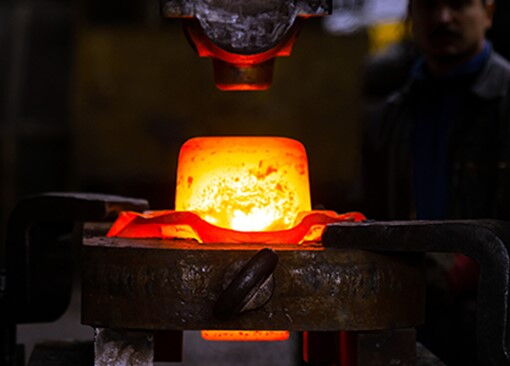
- Improved Mechanical Performance: One of the most significant advantages of hot die forging is its ability to significantly enhance the mechanical performance of forged components. During the hot die forging process, the metal is heated above its recrystallization temperature and then formed under controlled pressure. This process not only refines the metal's grain structure but also minimizes defects and porosity. As a result, forged parts exhibit excellent strength, toughness, and fatigue resistance. These characteristics make hot die forged components perform exceptionally well in applications requiring high strength and reliability.
- Precise Shape and Dimensional Control: Hot die forging allows excellent control over the final shape and dimensions of the product. Through die-controlled hot forging, manufacturers can achieve high precision and repeatability, ensuring consistency across production batches. This precise control capability enables hot die forging to realize complex designs that may be challenging with other methods. For example, complex components in automotive engines, such as crankshafts and connecting rods, can be accurately formed through hot die forging without requiring extensive machining. This not only saves costs but also shortens production time.
- Reduced Material Waste: Another significant advantage of hot die forging is its ability to minimize material waste. By using near-net-shape manufacturing techniques, hot die forging reduces the amount of excess material that needs to be removed through machining. This highly efficient material utilization not only lowers overall manufacturing costs but also contributes to sustainable development. This is particularly important in large-scale production, as reducing material costs directly translates into increased company profits.
- High Production Efficiency: Compared with other forging methods, hot die forging has clear advantages in production efficiency. The process requires shorter production cycles, thus increasing productivity. Additionally, the dies used in hot die forging have higher lifespans and durability, reducing downtime for maintenance and tool replacement. These factors together make hot die forging an efficient and economical manufacturing choice.
- Excellent Surface Finish: The controlled heating and forming process enables hot die forging to produce components with an extremely high surface finish. This characteristic minimizes surface defects, such as cracks and surface irregularities. Consequently, forged parts often require minimal or no post-forging processing, reducing additional machining steps and costs. The improved surface finish not only enhances the aesthetics of the component but also improves its functional performance and reliability.
- Material Versatility: Hot die forging is suitable for a wide range of forgeable materials, including ferrous and non-ferrous metals, as well as alloys and specialty materials. This diversity in material selection allows manufacturers to produce components appropriate for specific applications and industry requirements. For example, in the aerospace industry, high-strength, low-density materials such as titanium and aluminum alloys can be hot die forged into components that are both lightweight and strong, meeting the strict requirements for weight and strength in aircraft.
- Difference from Hammer Forging: Hammer forging relies on repeated impact to shape materials, whereas hot die forging uses controlled pressure and die-based forming. The advantages of die-controlled hot forging include better dimensional control, improved mechanical properties, and the ability to achieve complex shapes and designs with higher precision. In contrast, hammer forging may have a cost advantage for producing simple components, but for complex parts, hot die forging is undoubtedly the better choice.
- Difference from Press Forging: Press forging applies continuous and gradually increasing force, while hot die forging applies high pressure over a relatively short time. This characteristic of high-pressure rapid forming enables hot die forging to improve mechanical properties, increase material utilization, and better control shape and dimensions. When producing high-strength, high-precision components, the advantages of hot die forging are particularly evident.
- Difference from Cold Forging: Cold forging involves shaping metal at or near room temperature, while hot die forging relies on heating the material above its recrystallization temperature. Higher temperatures increase the metal's ductility, giving hot die forging a significant advantage when processing materials with poor room-temperature malleability. Additionally, hot die forging produces stronger and more durable products by eliminating internal defects within the metal. However, cold forging may be more cost-effective in certain applications where precision and surface finish are less critical.
The automotive industry is one of the largest beneficiaries of hot die forging technology. As the automotive sector continues to raise its requirements for component quality and performance, the application of hot die forging in automotive parts manufacturing has become increasingly widespread. Key applications include:
- Suspension Components: Vehicle suspension parts, such as control arms and steering knuckles, need to be both strong and lightweight. Hot die forging enables manufacturers to achieve both. Forging these components also produces denser materials with crack and wear resistance, thereby improving the overall reliability and service life of the suspension system.
- Engine and Transmission Components: Engine and transmission parts, such as crankshafts, connecting rods, and camshafts, require high strength and high precision. Hot die forging is an excellent method for manufacturing these components. Forged engine and transmission parts not only improve energy efficiency but also reduce emissions, making them a popular choice for manufacturers.
- Steering System Components: The steering system is a key safety component of vehicles. Hot die forging is used to manufacture parts such as steering knuckles and main shafts. By forging these components, manufacturers can produce parts that are stronger, lighter, and more wear-resistant. Forged steering components also reduce vibration, providing a smoother driving experience.
- Hubs and Axles: Hubs and axles must be strong and durable to withstand road wear. Hot die forging is an effective method for producing components that meet these requirements. Forged hubs and axles also reduce the vehicle's overall weight, improve fuel efficiency, and reduce emissions.
- Brake System Components: The brake system is another critical safety component of vehicles. Hot die forging is used to manufacture parts such as brake calipers and rotors. Forged brake components offer better performance and durability than cast parts, providing more consistent braking power and extending system lifespan.
Hot die forging technology, as a specialized and information-rich manufacturing method, has established an irreplaceable position in modern manufacturing. It not only enables the production of complex-shaped, high-performance metal components but also achieves high production efficiency, reduces material waste, and improves product quality. In the automotive industry, the application of hot die forging has already achieved remarkable results. In the future, with continuous technological development and innovation, hot die forging will play an even greater role in more fields. Whether in improving product quality, reducing production costs, or promoting sustainable development, hot die forging technology demonstrates enormous potential. Therefore, hot die forging is undoubtedly a pillar of modern manufacturing, deserving thorough study and wide application by every professional in the manufacturing industry.
