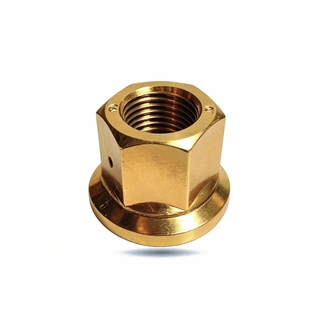
Automotive fasteners are the "industrial staple" that connects and secures all auto components. Tiny as they are, they are critical to vehicle safety and stable operation. A standard vehicle relies on thousands of fasteners.

Main Categories

  • Bolts: The most common type with high load-bearing capacity, normally paired with nuts. They are fitted to engines, chassis, suspensions and other locations subject to heavy loads and intense vibration. Flange bolts come with an integrated flange face for excellent anti-loosening performance and are widely adopted on chassis and engine brackets.
  • Screws: No mating nuts required. They thread directly into tapped holes for simple assembly, mostly used on interiors, dashboards, lamps and other low-load areas for positioning and fastening.
  • Nuts: Work with bolts and studs to provide locking. Automotive nuts demand reliable anti-loosening and compression resistance. Self-locking nuts resist sustained vibration while driving to avoid loosening and are widely used for wheels and chassis assemblies.
  • Rivets: Designed for permanent non-detachable joints. They are commonly used on body sheet metal and door hinges for robust connections.
  • Others: Including studs, washers and clips to build the full vehicle connection system.

Application Scenarios

  • Engine and Gearbox: A harsh working environment featuring high temperatures and intense vibration, requiring heat-resistant, high-strength bolts and nuts.
  • Chassis and Suspension: A core vehicle safety assembly subjected to impact loads. Fasteners for this area require outstanding fatigue resistance and high tensile strength.
  • Body Structure: BIW and interior & exterior trims use plenty of self-tapping screws, rivets and clips to balance mechanical strength, lightweight properties and visual finish.
  • New Energy Vehicles: Battery-pack fasteners are manufactured to more stringent standards. High strength and anti-loosening designs secure battery systems reliably.

Product Advantages

  • Automotive fasteners differ from general standard screws and are engineered to withstand severe vehicle operating conditions.
  • Strict Material Selection: Carbon steel, alloy steel and stainless steel are the primary materials. Aluminum alloy is increasingly used for lightweight construction.
  • Mature Manufacturing Process: Most items are cold-forged. This creates a compact internal grain structure for consistent mechanical properties and long service life.
  • High Strength Grades: Manufactured in accordance with automotive strength specifications. Typical grades are 8.8, 10.9 and 12.9. Higher grades offer higher load capacity for critical high-stress locations.
  • Surface Protection: Finishes including galvanizing and Dacromet deliver rust and corrosion resistance, suitable for diverse road and climatic environments.
1 result

The wheel nut is a safety fastener designed to secure vehicle wheel hubs to the axle. It locks the wheel assembly firmly for reliable driving.
Subjected to continuous vibration and road impact, wheel nuts require strict strength standards to prevent loosening. Most are made of carbon steel with heat treatment, finished with yellow zinc plating for corrosion resistance. The tapered seat design helps centering and even load distribution during tightening. Wheel nuts must be torqued to specified values after tire service.
 

Total 1 Records, 20 records per page